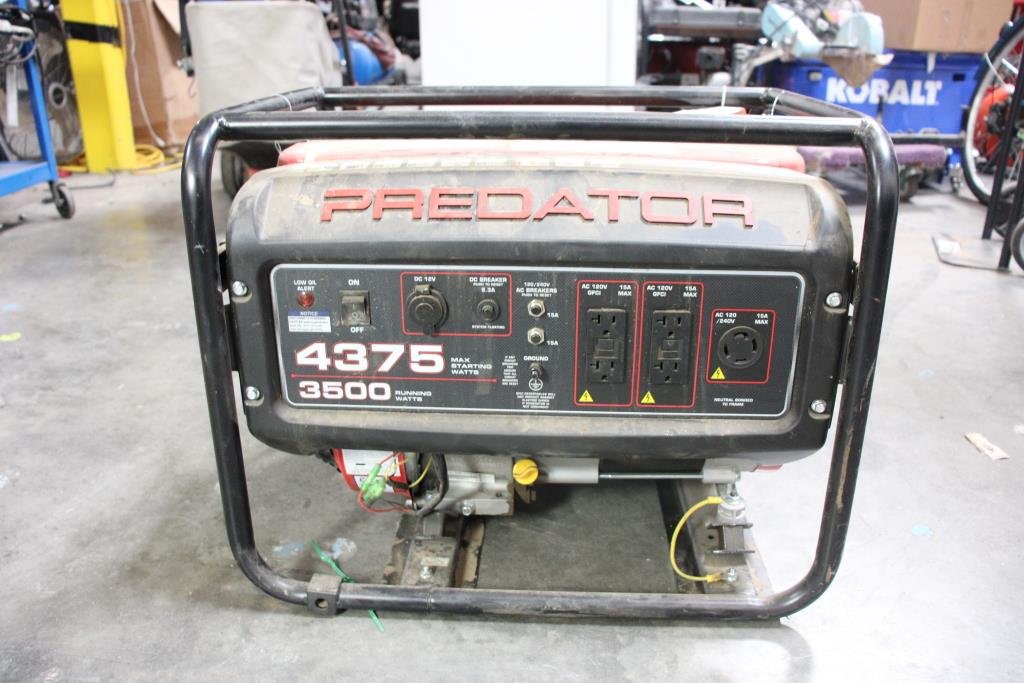
Predator 4375 Generator Usage for Home, Work, and RV: Your Go-To Portable Power Guide
Facing a power outage, heading to a remote job site, or planning an off-grid RV adventure? The right portable generator can be a game-changer. For countless users, the Predator 4375 generator has emerged as a reliable, budget-friendly workhorse, offering a versatile solution for diverse power needs. This comprehensive guide will deep dive into Predator 4375 generator usage and applications, helping you understand its capabilities, limitations, and how to get the most out out of this popular power source.
Before we jump into the specifics, here's a quick look at what makes the Predator 4375 a standout choice:
At a Glance: Predator 4375 Power Perks
- Power Output: 3500 running watts, 4375 peak watts – enough to handle essential home appliances, demanding job site tools, or most RV amenities.
- Engine: Robust 212cc OHV engine, renowned for durability.
- Runtime: Up to 10 hours at 50% load on a 4-gallon tank.
- Mobility: Weighing 99 lbs, it features integrated wheels and fold-down handles for easier transport.
- Affordability: Offers exceptional value compared to national brands.
- Versatile Outlets: Includes standard household 120V 20A, a 120V 30A twist-lock, and a 12V DC outlet.
- Safety First: Equipped with low oil shutdown and circuit breaker protection.
The Predator 4375: Your Portable Power Ally
The Predator 4375 isn't just another generator; it's a strategically balanced power solution designed for real-world scenarios. It strikes an enviable balance between raw power, convenient portability, and an approachable price point, which explains its popularity across a wide spectrum of users. Whether you're a homeowner preparing for emergencies or a contractor needing reliable on-site power, understanding this generator's core features is key.
Powering Up Your Life: A Closer Look at the Specs
At its heart, the Predator 4375 boasts a 212cc OHV single-cylinder four-stroke engine, known for its consistent performance and ease of maintenance. This powerhouse delivers a continuous output of 3500 running watts, with the ability to surge up to 4375 peak watts for starting demanding tools or appliances.
Fueling this performance is a generous 4-gallon fuel tank, providing an impressive 10-hour runtime at 50% load. That's a full night's sleep or a solid workday without needing to refuel. For connectivity, you'll find two standard 120V 20A household outlets (5-20R), a crucial 120V 30A twist-lock outlet (L5-30R) for higher power demands or transfer switch connections, and a 12V DC outlet for battery charging.
Despite its substantial capabilities, it remains manageable at 99 pounds, with dimensions of 22.8″ L x 17.3″ W x 17.5″ H, aided by integrated never-flat wheels and fold-down handles. Its operational noise level is 72 dB, which is typical for a conventional generator of this size. Starting is a straightforward manual recoil pull, backed by essential safety features like low oil shutdown and circuit breaker protection.
Why the Predator 4375 Stands Out from the Pack
What truly distinguishes the Predator 4375 in a crowded market? It's the combination of its robust build, thoughtful features, and competitive pricing. Typically found between $349-$399, it offers significant savings without compromising on core functionality. This price point makes reliable backup power accessible to a wider audience.
Beyond the cost, its 212cc engine has earned a reputation for reliability and longevity, making it a favorite among those who appreciate durable equipment. The long runtime means less frequent refueling, a huge convenience during extended use. Finally, the availability of affordable and readily accessible replacement parts ensures that maintaining your generator over the years is both simple and economical. For a more comprehensive look, you can often find a detailed Predator 4375 generator overview online, helping you understand all its features.
Unleashing Its Potential: Real-World Applications
The Predator 4375 is a remarkably versatile machine, capable of powering a wide array of essential items across different settings. Its 3500 running watts means you can keep crucial systems online, making it ideal for everything from unexpected emergencies to planned recreational activities.
Keeping Your Home Running During Outages
When the lights go out, the Predator 4375 quickly becomes your household hero. It's perfectly suited for managing critical circuits in a typical home during a power failure.
- Refrigerator (700W running/1500W starting): Keeps your food fresh.
- Freezer (500W/1000W starting): Protects your frozen goods.
- Sump Pump (800W/1300W starting): Prevents basement flooding.
- Furnace Fan (800W): Provides heat during colder months (for gas furnaces).
- Multiple Lights (400-500W): Illuminates key areas.
- TV/Entertainment (200-300W): Keeps you informed and entertained.
- Microwave (1000W intermittent): Allows for quick meal prep.
- Small Space Heater (1000-1500W): Provides supplemental warmth in a single room.
Key Strategy: To maximize the generator's effectiveness during a home emergency, you'll need to practice strategic appliance cycling. This means running one high-wattage item (like a microwave) briefly, then turning it off before starting another, preventing overload and ensuring you stay within the 3500W continuous capacity.
Powering Your Progress on the Job Site
For contractors, tradespeople, and serious DIYers, the Predator 4375 provides robust power for a variety of tools, especially when grid power isn't available. The 30-amp twist-lock outlet is particularly valuable here, allowing for heavier-duty extension cords and power distribution boxes.
- Circular Saw (1500W): Handles most cutting tasks.
- Small Air Compressor (1200-1600W): Essential for nail guns and other pneumatic tools.
- Work Lights (500W): Illuminates your workspace.
- Battery Chargers (200W): Keeps cordless tool batteries ready.
- Drills/Impact Drivers (600-900W): Powers fastening and drilling.
- Smaller Table Saw (1800W): Capable of light to medium woodworking tasks.
This generator can easily run a combination of these tools, though it's always wise to calculate total running and starting watts to avoid tripping breakers.
Comfort on the Go: RV and Camping Power
RV enthusiasts and campers often turn to the Predator 4375 for dependable power in remote locations. It's strong enough to run many of the conveniences you enjoy at home, enhancing your outdoor experience.
- RV Air Conditioner (1500-2000W): Crucially, it's capable of running a 13,500 BTU RV AC unit, a major comfort on hot days.
- Electric Cooking Appliances (1000-1500W): Coffee makers, toasters, small electric griddles.
- Lighting (200-400W): Interior and exterior lights for safety and ambiance.
- Entertainment Systems (200-300W): TVs, stereos, gaming consoles.
- Small Refrigerator (300-500W): Supplemental cooling for food and drinks.
- Battery Charging (100-200W): Keeps your RV's house batteries topped up.
Remember that while it can run an RV AC, you might need to turn off other high-draw appliances temporarily to prevent overloading.
Elevating Events and Mobile Ventures
From outdoor parties and farmers' markets to mobile workshops or food service operations, the Predator 4375 can provide the necessary juice to keep things running smoothly.
- Lighting Systems (400-800W): Stage lighting, booth illumination, general area lighting.
- Sound Equipment (300-500W): PA systems, speakers, DJ setups.
- Food Service Equipment: Small blenders, warmers, coffee machines (always check wattage).
- Point-of-Sale Systems (100-200W): Keeping your business transaction-ready.
- Fans or Heaters (1000-1500W): For climate control in temporary structures.
Specific Appliances and Tools It Can Handle
Beyond the broad categories, here are some specific high-demand items the Predator 4375 can typically power:
- Small to medium window air conditioners: Anywhere from 500W to 1500W, depending on the unit size.
- Well pumps/water pumps: Generally, pumps under 3000W running watts with manageable starting surges. Always verify your pump's specific wattage requirements.
Knowing Its Limits: What the Predator 4375 Isn't For
While versatile, it's crucial to understand the limitations of the Predator 4375. Attempting to power items beyond its capacity can lead to tripped breakers, damage to the generator, or even potential safety hazards.
This generator is not suitable for:
- Central Air Conditioning Units: These typically require 3500W+ starting wattage and significantly more running watts than the Predator 4375 can continuously provide.
- Electric Water Heaters: These are major power hogs, often drawing 3000W to 4500W continuously, far exceeding the generator's sustained output.
- Running Multiple High-Power Appliances Simultaneously: While it can handle individual high-draw items, trying to run a microwave, a space heater, and a circular saw all at once will likely trip the breaker.
- High-Power Workshop Machinery: Large welders, heavy-duty air compressors (beyond typical portable job site models), or industrial machinery demand significantly more power than 3500 continuous watts.
- Clean Power for Sensitive Electronics: Like most conventional generators, the Predator 4375 produces "dirty" power (higher THD - Total Harmonic Distortion). While fine for most appliances and tools, sensitive electronics (like high-end computers, medical devices, or delicate audio equipment) are better served by an inverter generator, which produces cleaner, stable sine wave power.
Always check the running and starting wattage of your appliances and tools before connecting them. The golden rule: stay within the 3500 running watts for continuous use and respect the 4375 peak watts for short bursts.
Getting Started: Setup and First Start Simplified
Before you can harness the power of your Predator 4375, a few straightforward setup steps are necessary. Taking the time to do this correctly ensures safe and efficient operation from day one.
Initial Assembly and Fluids
- Unpack and Assemble: Install the included wheel kit and fold-down handles. This makes moving the 99-pound unit significantly easier.
- Add Engine Oil: The engine is shipped without oil. You'll need to add approximately 0.6 quarts (20 oz) of SAE 10W-30 oil. If you're operating in very cold conditions (below 20°F / -7°C), 5W-30 is a better choice. Fill to the top of the dipstick without screwing it in.
- Fuel Up: Fill the 4-gallon tank with fresh, unleaded gasoline (87+ octane with a maximum of 10% ethanol). Avoid using old or E15/E85 fuels, as they can damage the carburetor.
- Check Air Filter: Ensure the air filter is clean and properly seated.
- Grounding (Optional but Recommended): For added safety, especially on job sites or fixed installations, you can ground the generator using a grounding rod and wire connected to the generator's grounding terminal.
Your First Start: A Step-by-Step Guide
Once your generator is prepped, starting it is a simple process:
- Position Safely: Place the generator outdoors on a firm, level surface, at least 20 feet away from any doors, windows, or vents. Ensure clear space around it for ventilation.
- Check Levels: Double-check that you have adequate oil and fuel.
- Fuel Valve "ON": Locate the fuel valve and turn it to the "ON" position.
- Choke Position: If the engine is cold, move the choke lever to the "CLOSED" or "FULL CHOKE" position. If the engine is warm, you might not need to use the choke, or only partially.
- Engine Switch "ON": Turn the engine master switch to the "ON" position.
- Pull to Start: Grip the starter handle firmly and pull it rapidly until the engine starts. It might take a few pulls.
- Open Choke: Once the engine starts and runs smoothly, gradually move the choke lever to the "OPEN" or "RUN" position.
- Warm-Up: Allow the generator to run for a few minutes without any load connected. This helps it warm up and stabilize before you begin plugging in appliances.
- Connect Loads: Only connect appliances or tools after the generator is running smoothly.
Shutdown Procedure
Always remember to remove all connected loads and turn off the circuit breakers on the generator before shutting down the engine. This prevents potential damage to your appliances or the generator's electrical components. Once loads are removed, turn the engine switch to "OFF" and close the fuel valve.
Powering Up Safely: Essential Operating Practices
Operating any generator requires adherence to strict safety protocols to prevent accidents, injuries, and carbon monoxide poisoning. The Predator 4375, while reliable, demands respect for its power.
Carbon Monoxide: The Silent Danger
This is perhaps the most critical safety warning. Generators produce carbon monoxide (CO), a colorless, odorless, and deadly gas.
- Operate ONLY Outdoors: Never run a generator indoors, in a garage, shed, carport, or any enclosed or partially enclosed area.
- Maintain Distance: Position the generator at least 20 feet (6 meters) away from your home, and ensure its exhaust is directed away from doors, windows, and vents to prevent fumes from entering living spaces.
- CO Detectors are Essential: Install battery-operated carbon monoxide detectors with alarms in your home, especially near sleeping areas, and check them regularly.
Electrical Safety & Overload Prevention
- Dry Conditions: Avoid operating the generator in wet conditions (rain, snow, standing water) unless it is properly protected by a canopy or cover that does not impede ventilation. Never touch a generator with wet hands.
- Proper Extension Cords: Use only heavy-duty, outdoor-rated extension cords that are properly grounded and have an amperage rating sufficient for the load. Inspect cords for damage before each use.
- Avoid Backfeeding: Never plug the generator directly into a wall outlet of your home. This practice, known as "backfeeding," can electrify utility lines and injure or kill utility workers and neighbors. If connecting to home wiring, use a properly installed manual transfer switch by a qualified electrician.
- Respect Capacity: Do not exceed the generator's 3500W continuous capacity or its 4375W surge capacity. Always connect larger starting loads first, then add smaller ones. Monitor the circuit breakers on the control panel; if one trips, reduce the load before resetting it.
Refueling Safely
- Cool Down First: Always turn off the generator and allow it to cool completely before refueling. Gasoline is highly flammable, and spilled fuel on a hot engine can ignite.
- No Smoking: Never smoke or use an open flame near the generator, especially during refueling.
- Clean Spills: Wipe up any spilled fuel immediately.
- Store Fuel Safely: Store gasoline in approved containers in a well-ventilated area, away from heat sources and ignition sources.
Keeping It Running Strong: Maintenance for Longevity
Regular maintenance is the secret to extending the life of your Predator 4375 and ensuring it's ready when you need it most. This generator is designed for ease of maintenance, making it manageable for the average user.
Your Maintenance Checklist: Before & After
- Before Each Use:
- Check engine oil level.
- Inspect air filter for dirt/debris.
- Look for fuel leaks.
- Verify controls operate freely.
- Check cooling fins for blockages.
- After First 20 Hours (Break-in):
- Change engine oil – crucial to remove initial wear particles.
- Check/adjust valve clearance (often best left to a professional).
- Inspect spark plug.
- Every 50 Hours / 3 Months:
- Change engine oil.
- Clean air filter.
- Clean spark plug.
- Clean fuel sediment cup.
- Every 100 Hours / 6 Months:
- Change engine oil.
- Clean/replace air filter.
- Replace spark plug (if needed).
- Clean fuel tank/filter, spark arrestor.
- Check fuel hoses.
- Every 300 Hours / Annually:
- Replace spark plug, air filter.
- Check/adjust valve clearance (professional service recommended).
- Clean combustion chamber (professional service recommended).
- Check fuel lines for cracks or leaks.
- Inspect/clean carburetor.
Routine Maintenance Deep Dive
Oil Change
- Warm the Engine: Run the generator for a few minutes to warm the oil, making it drain more easily.
- Drain Old Oil: Place a drain pan under the oil drain plug, remove the plug, and allow all the old oil to drain. The capacity is 0.6 quarts (20 oz).
- Refill: Reinstall the drain plug. Fill the crankcase with fresh SAE 10W-30 oil to the full mark on the dipstick (do not screw it in to check).
- Proper Disposal: Dispose of used oil responsibly at an approved recycling center.
Air Filter
- Foam Elements: Remove, wash in warm, soapy water, rinse thoroughly, allow to air dry completely, then lightly coat with clean engine oil and squeeze out excess.
- Paper Elements: Tap gently to remove loose dirt. If heavily soiled, replace it.
Spark Plug
- Remove: Use a spark plug wrench to remove the existing plug.
- Inspect: Look for fouling, carbon buildup, or electrode wear.
- Clean/Replace: If salvageable, clean with a wire brush. Otherwise, replace with a new F7TC equivalent plug.
- Gap: Set the electrode gap to 0.7-0.8mm (0.028-0.031″) using a feeler gauge.
- Install: Hand-tighten the new plug, then give it a final snug turn with the wrench.
Seasonal Storage: Putting Your Generator Away
If you plan to store your Predator 4375 for more than 30 days, proper preparation is essential to prevent fuel-related issues and ensure it starts easily next season.
- Fuel Stabilizer: Add a high-quality fuel stabilizer to the gas tank according to the manufacturer's directions. Run the generator for 10 minutes to circulate the stabilized fuel through the carburetor.
- Drain Carburetor: Turn the fuel valve to "OFF" and let the engine run until it stops from lack of fuel. This drains the carburetor bowl, preventing gumming.
- Oil Change: While the engine is still warm, perform an oil change.
- Cylinder Fogging: Remove the spark plug. Add about 1 tablespoon of clean engine oil into the spark plug hole. Slowly pull the recoil starter a few times to distribute the oil, then reinstall the spark plug. This protects internal components from rust.
- Clean and Cover: Clean the exterior of the generator, ensure cooling fins are free of debris, and store it in a clean, dry area, preferably covered, to protect it from dust and moisture.
When Things Go Wrong: Common Troubleshooting Tips
Even well-maintained generators can encounter issues. Here's a quick guide to common problems with the Predator 4375 and how to approach them.
Engine Won't Start? Here's What to Check
- Fuel Issues: Is the fuel tank empty? Is the fuel old or stale? (Gasoline can go bad in 30-90 days without stabilizer). Is the fuel valve "ON"? Is the fuel filter or line clogged?
- Oil Level: Is the engine oil level too low? The low oil shutdown feature will prevent starting.
- Spark: Is the spark plug faulty, dirty, or incorrectly gapped? Is the spark plug wire loose?
- Choke: Is the choke in the correct position for a cold start ("CLOSED")?
- Air Filter: Is the air filter excessively dirty and restricting airflow?
- Carburetor: A very common culprit for starting issues, especially after storage, is a clogged carburetor (often due to old fuel). This might require cleaning or replacement.
Low or No Power Output?
- Tripped Breakers: Have the circuit breakers on the generator's control panel tripped? Reset them after reducing the load.
- Faulty Outlets: Try different outlets on the generator.
- Engine Speed: Is the engine running at its proper speed (around 3600 RPM under load)? Low engine speed can lead to low voltage.
- Overload: Are you trying to power too many items or items with too high a wattage?
- Internal Issues: If none of the above, it could be an issue with the AVR (Automatic Voltage Regulator) or internal wiring, which often requires professional diagnosis.
Performance Quirks and What They Mean
- Engine Surging or "Hunting": The engine revs up and down repeatedly. This often indicates fuel quality issues, a partially clogged fuel system (carburetor jet), air leaks, or governor problems.
- Engine Runs Then Dies: Could be a clogged fuel cap vent (creating a vacuum), low oil shutdown activating, ignition problems, or a partially clogged fuel line/filter.
- Excessive Vibration: Check for loose mounting hardware. Could also indicate internal engine problems, unbalanced components, or debris on cooling fins.
- Unusual Noises: Rattling, knocking, or grinding sounds suggest loose parts, bearing wear, valvetrain issues, or exhaust leaks. Shut down immediately and investigate.
Stocking Up: Essential Parts and Supplies
Having a small inventory of common replacement parts and maintenance supplies can save you considerable downtime. These items are generally affordable and widely available for the Predator 4375.
Maintenance Items You Should Have on Hand:
- Engine Oil: A quart or two of SAE 10W-30 (or 5W-30 for cold weather).
- Air Filter: A spare air filter element.
- Spark Plug: At least one spare F7TC equivalent spark plug.
- Fuel Filter: A spare inline fuel filter.
- Fuel Stabilizer: Essential for long-term storage.
- Spark Arrestor Screen: Can get clogged over time.
Common Replacement Parts (Good to Know About):
- Recoil Starter Assembly: These can wear out over time.
- Wheels: If your original wheels get damaged.
- Carburetor: A common replacement if cleaning isn't enough, relatively inexpensive.
- Fuel Tank Components: Fuel cap, fuel valve, fuel lines.
- Control Panel Components: Outlets, switches (though less common).
Is the Predator 4375 Right for You? Making an Informed Choice
Deciding on a generator involves weighing your specific needs against a unit's capabilities and limitations. The Predator 4375 shines for certain users but might not be the perfect fit for everyone.
Who Will Love This Generator
- Homeowners Seeking Affordable Emergency Backup: If you need to power essential appliances during an outage without breaking the bank, this generator offers exceptional value.
- Contractors and DIY Enthusiasts: For those needing reliable power for common job site tools, especially when an outlet is crucial, the 30A twist-lock adds significant utility.
- RV Owners and Campers: Capable of running a 13,500 BTU RV air conditioner and other comforts, it's a popular choice for mobile power.
- Budget-Conscious Buyers: Its price point is hard to beat for the power and features it offers.
- Users with Moderate Mechanical Skills: The generator is straightforward to maintain, and parts are easy to find, making it manageable for those who like to do their own service.
Who Might Need a Different Solution
- Users Needing Clean Power for Sensitive Electronics: If you plan to power high-end computers, sensitive medical equipment, or delicate audio/video gear, an inverter generator, which produces cleaner sine wave power, would be a better choice.
- Those Prioritizing Ultra-Quiet Operation: At 72 dB, the Predator 4375 is typical for its class but not "whisper-quiet." If noise is a primary concern (e.g., in crowded campgrounds), a quieter inverter generator is preferable.
- Applications Requiring Over 3500W Continuous Power: For whole-house backup or to run multiple high-draw appliances simultaneously, you'll need a larger conventional generator or a whole-house standby system.
- Individuals Struggling with Manual Starting: The Predator 4375 relies on a manual recoil pull start. If physical limitations or a preference for push-button convenience are factors, an electric start generator is a better option.
- Whole-House Backup Needs: While it can run critical circuits, it's not designed to power an entire modern home with central AC, electric dryer, electric range, etc.
Power Up with Confidence
The Predator 4375 generator stands as a testament to practical engineering and value. Its robust engine, generous runtime, and versatile outlets make it an excellent choice for a wide array of Predator 4375 generator usage and applications, from powering your home through an emergency to bringing comfort to your RV or powering tools on a remote work site. By understanding its capabilities, respecting its limitations, and committing to regular maintenance and safe operating practices, you'll ensure your Predator 4375 remains a dependable source of portable power for years to come.