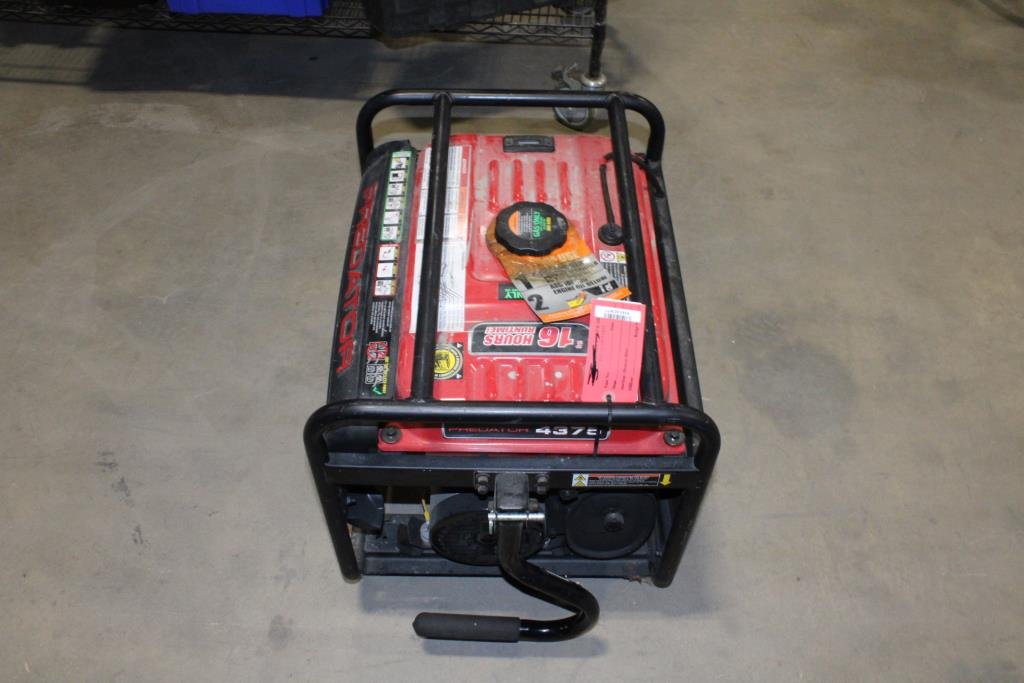
Picture this: the lights flicker, then plunge into darkness. Or perhaps you're miles from civilization, setting up camp, and need to power your comforts. In these moments, a reliable portable generator isn't just a convenience – it's a lifeline. This comprehensive guide will walk you through the Predator 4375 Generator Setup & First Start Guide, ensuring your powerhouse is ready to roar when you need it most, from unboxing to its very first reliable hum.
We’re not just talking about flipping a switch; we’re diving into understanding what makes this particular generator a standout choice and how to get the most out of it safely and efficiently. The Predator 4375 strikes a sweet spot between raw power, grab-and-go portability, and a price tag that won't break the bank, making it a favorite for storm season prep, active job sites, or remote adventures.
At a Glance: Why the Predator 4375 Matters (Quick Takeaways)
- Serious Value: Get reliable power for significantly less than comparable national brands.
- Strong Performance: Delivers 3500 running watts (4375 peak) to handle crucial appliances and tools.
- Extended Runtime: Enjoy up to 10 hours of power at half load on a single 4-gallon tank.
- Built Tough: Features a robust 212cc OHV engine, designed for durability and easy maintenance.
- Portable Power: Integrated never-flat wheels and fold-down handles make moving its 99 lbs manageable.
- Versatile Outlets: Equipped with multiple 120V and a 12V DC outlet, including a 30A twist-lock for higher demands.
- User-Friendly: Straightforward manual recoil start and an intuitive control panel.
Getting to Know Your Powerhouse: What Makes the Predator 4375 Tick?
Before we get our hands dirty with setup, let’s quickly establish why the Predator 4375 has earned its stripes in the crowded portable generator market. It's a mid-range marvel, balancing impressive capability with an accessible price point, typically ranging from $349-$399. This makes it an exceptional value proposition when compared to national brands that often sit in the $600-$800 range for similar output.
At its core, the Predator 4375 houses a sturdy 212cc OHV single-cylinder four-stroke engine, capable of generating 3500 continuous running watts and a surge capacity of 4375 watts. This kind of power, coupled with a 4-gallon fuel tank, allows it to run for about 10 hours at a 50% load – a substantial runtime for any emergency or project.
While it hums along at 72 dB, which is typical for conventional generators of its size, its integrated never-flat wheels and fold-down handles make its 99-pound weight far less daunting to move around. Plus, its control panel is well-organized, offering easy access to two 120V 20A outlets, one 120V 30A twist-lock (L5-30R), and a 12V DC outlet. Safety features like low oil shutdown and circuit breaker protection are standard, giving you peace of mind.
What Can It Power? Real-World Scenarios
Understanding the Predator 4375's capabilities helps you plan its deployment. With 3500 running watts, it's a versatile machine.
- Home Emergency Backup: During a power outage, it can keep critical items running. Think refrigerator (700W), freezer (500W), a sump pump (800W), your furnace fan (800W), some lights (400-500W), and a TV (200-300W). You can even cycle a microwave (1000W intermittently) or a small space heater (1000-1500W) if needed. Strategic management of appliances is key here.
- Construction and Job Sites: Powering tools is where this generator shines. It can easily handle a circular saw (1500W), a small air compressor (1200-1600W), work lights (500W), battery chargers (200W), drills (600-900W), and even smaller table saws (1800W). The 30-amp twist-lock outlet is particularly useful for connecting to distribution boxes.
- RV and Camping: For adventurers, the Predator 4375 can run a standard 13,500 BTU RV air conditioner (1500-2000W), electric cooking appliances (1000-1500W), lighting (200-400W), entertainment systems (200-300W), a small refrigerator (300-500W), and charge batteries (100-200W).
- Special Events and Mobile Businesses: Need power for a remote setup? This generator can support lighting systems (400-800W), sound equipment (300-500W), food service equipment, point-of-sale systems (100-200W), and fans or heaters (1000-1500W).
The Predator 4375 truly delivers a robust performance for its class, making it a go-to choice for a wide array of power needs. To dive deeper into its full capabilities and user experiences, you can Learn more about the Predator 4375.
Unboxing to Unleashing: Your Predator 4375 Setup Journey
You’ve got your Predator 4375 home. Now what? Let’s get it ready for action with a few straightforward steps. Remember, safety first! Always refer to your owner's manual for precise diagrams and warnings.
Step 1: Assembly – Wheels, Handles, and the Grounding Connection
Most generators require minimal assembly, and the Predator 4375 is no exception. This typically involves attaching the mobility kit components:
- Install the Wheels: These make a 99-pound generator a breeze to move. Follow the instructions to securely fasten the never-flat wheels to the generator frame using the provided axles, washers, and cotter pins.
- Attach the Handles: The fold-down handles are designed for ergonomic transport. Mount them to the designated points on the frame.
- Grounding Your Generator: This is a crucial safety step to prevent electrical shock.
- External Grounding: The Predator 4375 has a grounding terminal on its frame. Connect a heavy-gauge copper wire (at least 12-gauge, preferably 10-gauge or thicker for longer runs) from this terminal to a proper earth ground.
- Establishing an Earth Ground: The most common method is driving an 8-foot copper or copper-clad steel grounding rod into the earth at least 6 inches from the generator. Securely clamp the grounding wire to the rod.
- Why Ground? Grounding dissipates stray electrical currents, protecting you and your equipment from potential faults. While many generators are "floating neutral" and may not strictly require external grounding for all uses per specific electrical codes (like an RV setup), it's always considered a best practice for general home or job site use.
Step 2: Fueling Up – The Right Oil and Gas
This is where your generator truly comes to life. Don't skimp on quality here; it impacts performance and longevity.
- Add Engine Oil:
- Locate the oil fill cap/dipstick on the engine (often yellow or black and textured).
- The Predator 4375 requires 0.6 quarts (approximately 20 oz) of SAE 10W-30 oil.
- For colder climates (below 40°F / 4°C), SAE 5W-30 is recommended for easier starting.
- Use a funnel to avoid spills. Fill slowly, checking the dipstick frequently. Do not overfill; the oil level should be at the upper mark on the dipstick when fully inserted (or resting on the threads, depending on your model's dipstick design).
- The engine has a low oil shutdown feature, so it simply won't start or will shut off if the oil level is too low.
- Add Gasoline:
- Ensure the generator is on a level surface and the engine is off and cool.
- Use fresh, unleaded 87+ octane gasoline.
- Crucially, use gasoline with no more than 10% ethanol. Higher ethanol concentrations can damage fuel system components over time. Check the pump label!
- Fill the 4-gallon tank carefully, leaving a little space at the top for expansion – don't fill to the brim. Avoid spilling gas on the hot engine or exhaust. Always refuel outdoors and away from ignition sources.
Step 3: Pre-Flight Checks – A Quick Safety Rundown
Before you even think about starting, perform these quick checks:
- Check Air Filter: Ensure the air filter is clean and properly seated. A dirty filter can hinder performance.
- Inspect Spark Plug: Make sure the spark plug wire is securely connected.
- Review Connections: Double-check that all assembly components are tight and secure.
- Clear the Area: Ensure the generator is at least 20 feet from any windows, doors, vents, or other openings to your home or adjacent buildings. Place it on a firm, level surface, away from any combustible materials.
The Big Moment: First Start Procedure (And Every Start After)
With your Predator 4375 assembled and fueled, it’s time to bring it to life. The manual recoil pull start is straightforward once you get the hang of it.
Pre-Start Checklist
- Location: Generator must be outdoors, in a well-ventilated area, and on a stable, level surface. Never operate it indoors or in a garage, even with the door open. Carbon monoxide is odorless, colorless, and deadly.
- Oil & Fuel: Re-check oil level and fuel quantity.
- Outlets: Ensure no appliances are plugged into the generator yet. All circuit breakers should be in the "OFF" or "RESET" position.
The Step-by-Step Starting Guide
- Fuel Valve "ON": Locate the fuel valve (often a small lever) near the carburetor and turn it to the "ON" or "OPEN" position. This allows fuel to flow to the engine.
- Choke to "CLOSED" (for cold starts): If the engine is cold, move the choke lever to the "CLOSED" or "FULL CHOKE" position. This enriches the fuel-air mixture for easier starting. If the engine is already warm, you might not need the choke, or only a partial choke.
- Engine Switch "ON": Find the engine ON/OFF switch (sometimes labeled "RUN/STOP" or "ENGINE") and flip it to the "ON" or "RUN" position.
- Pull the Starter Grip: Grasp the recoil starter grip firmly. Pull it slowly until you feel resistance, then give a rapid, strong pull with a full arm's length motion. Do not let the rope snap back; guide it gently.
- You may need several pulls. If it doesn't start after a few attempts, briefly check the fuel, oil, and choke settings.
- Gradually Move Choke to "OPEN": Once the engine fires and runs smoothly, slowly move the choke lever to the "OPEN" or "RUN" position. The engine sound will change, indicating it's operating on a normal fuel-air mixture. If it stalls, move the choke back partially and try again, then slowly open it.
- Allow Warm-up: Let the generator run for a few minutes without any load to stabilize.
Connecting Loads
Once the engine is running smoothly and warmed up:
- Plug in your appliances or extension cords.
- Flip the individual circuit breakers on the generator's control panel to the "ON" position as needed.
- Always connect larger loads first, then smaller ones. Avoid exceeding the generator's running wattage (3500W) or surge wattage (4375W). If the engine strains or the output drops, you may be overloading it.
Safety First, Always: Operating Your Generator with Confidence
Operating a generator safely is paramount. It’s powerful equipment that demands respect.
Carbon Monoxide: The Invisible Threat
This cannot be stressed enough: Never operate the Predator 4375 (or any gasoline generator) indoors, in a garage, shed, or any partially enclosed space. Generators produce carbon monoxide (CO), an odorless, colorless, tasteless gas that can be fatal in minutes.
- Placement: Always place your generator at least 20 feet (preferably 25 feet) away from your home, garage, or any other building, with the exhaust pointed away from structures.
- CO Detectors: Install battery-operated carbon monoxide detectors with alarms in your home, especially near sleeping areas. Test them regularly.
Extension Cords and Overload Protection
- Outdoor-Rated Cords: Use only heavy-duty, outdoor-rated extension cords (e.g., 12-gauge or 10-gauge) that are long enough to reach your appliances without being stretched or run through doorways or windows.
- Protect Cords: Protect cords from sharp objects, hot surfaces, and foot traffic.
- Circuit Breakers: The Predator 4375 has built-in circuit breakers. If you overload a circuit, the breaker will trip, cutting power to that outlet. Reduce the load and reset the breaker.
Refueling Safely
- Cool Down: Always turn off the generator and allow it to cool for at least 15-20 minutes before refueling. Gasoline poured onto a hot engine can ignite.
- Spill Cleanup: Clean up any spilled fuel immediately and completely before restarting the generator.
- No Smoking: Never smoke near the generator, especially during refueling.
- Fuel Storage: Store gasoline in approved, labeled containers in a well-ventilated area, away from living spaces and heat sources.
Keeping Your Predator Roaring: Essential Maintenance
Consistent maintenance is the secret sauce for your Predator 4375's longevity and reliable performance. Think of it like taking care of your car – small efforts now prevent big headaches later. Parts for the Predator 4375 are generally readily available and affordable, making maintenance even more practical.
Why Regular Maintenance Isn't Optional
Neglecting maintenance can lead to:
- Hard starting or failure to start.
- Reduced power output.
- Shorter lifespan of the generator.
- Increased fuel consumption.
- Costly repairs.
Your Maintenance Schedule at a Glance
This general schedule assumes typical use. If you use your generator heavily or in dusty/extreme conditions, adjust accordingly.
| Task Category | Before Each Use | After First 20 Hours (Break-in) | Every 50 Hours or 3 Months | Every 100 Hours or 6 Months | Every 300 Hours or Annually |
|---|---|---|---|---|---|
| Engine Oil | Check level | Change oil | Change oil | Change oil | Change oil |
| Air Filter | Check | Clean | Clean/Replace | Replace | |
| Spark Plug | Check connection | Inspect | Check/Clean | Check/Clean | Replace |
| Fuel System | Check for leaks | Clean sediment cup | Clean tank/filter | Check lines, clean carb | |
| Cooling Fins | Check for debris | Clean | |||
| Valve Clearance | Check/Adjust | Check/Adjust (Pro Service) | |||
| Spark Arrestor | Clean | ||||
| Combustion Chamber | Clean (Pro Service) |
Key Maintenance Procedures Explained
These are the most common tasks you can typically handle yourself.
Oil Change
- When: After the initial 20-hour break-in, then every 50 hours or 3 months.
- How: Warm up the engine for a few minutes (this helps the oil drain better). Turn off the generator. Place a drain pan underneath the oil drain plug (usually a bolt on the lower side of the engine). Remove the drain plug and the oil fill cap to allow the oil to flow freely. Once drained, reinstall the drain plug, ensuring it's snug but not overtightened. Refill with approximately 0.6 quarts (20 oz) of fresh SAE 10W-30 oil. Check the dipstick to ensure the level is correct.
Air Filter
- When: Clean every 50 hours, replace every 100 hours or annually.
- How: Locate the air filter housing (often a plastic box on the side of the engine). Remove the cover. Carefully take out the foam and/or paper elements.
- Foam elements: Wash in warm, soapy water, rinse thoroughly, let air dry completely, then lightly oil with clean engine oil and squeeze out excess.
- Paper elements: Tap gently to remove loose dirt. If heavily soiled, replace it. Do not wash paper elements.
- Reinstall clean/new elements and secure the cover.
Spark Plug
- When: Inspect every 50 hours, replace every 100-300 hours or annually (as needed). The Predator 4375 typically uses an F7TC spark plug.
- How: Disconnect the spark plug cap. Use a spark plug wrench to carefully remove the plug. Inspect the electrode for deposits or damage. If cleanable, use a wire brush. Check the gap using a feeler gauge; it should be 0.7-0.8mm (0.028-0.031″). Adjust by carefully bending the ground electrode if needed. Reinstall the plug, hand-tightening first to avoid cross-threading, then tighten with the wrench (don't overtighten). Reconnect the spark plug cap.
Carburetor Cleaning (Fuel Sediment Cup)
- When: Clean the sediment cup every 50 hours. Full carburetor cleaning, only if problems arise or annually if storing for long periods without fuel stabilizer.
- How (Sediment Cup): Turn off the fuel valve. Place a small container beneath the carburetor. Unscrew the sediment cup (often a small bowl at the bottom of the carburetor). Clean out any debris or water. Reinstall securely.
- How (Full Carburetor): If you suspect a clog, you might need to drain the bowl, remove the bowl, and clean the main and pilot jets with carburetor cleaner and compressed air. This is a more involved task; if you're not comfortable, professional service is advisable.
Storage (Over 30 Days)
Proper storage prevents common issues like fuel degradation.
- Fuel Stabilizer: Add a fuel stabilizer to the gasoline tank and run the generator for 10-15 minutes to circulate the stabilizer through the fuel system.
- Drain Fuel/Run Dry: Turn off the fuel valve and let the engine run until it runs out of fuel and stalls. This ensures the carburetor is dry and prevents gumming.
- Change Oil: Perform an oil change.
- Cylinder Protection: Remove the spark plug. Pour about 1 tablespoon of clean engine oil into the cylinder. Gently pull the starter cord a few times (with the spark plug out) to distribute the oil, then reinstall the spark plug. This lubricates the cylinder walls and prevents rust during storage.
- Clean & Cover: Clean the exterior of the generator, ensure cooling fins are free of debris, and store it in a clean, dry, covered location.
When Things Go Sideways: Troubleshooting Common Issues
Even the most robust generators can have an off day. Here's a quick guide to diagnosing common problems with your Predator 4375.
"It Won't Start!"
This is the most frequent complaint.
- Empty/Stale Fuel: Is there fresh gas? Old gas (over 30 days) can cause starting issues.
- Low Oil Shutdown: Check your oil level. The generator won't start if it's too low.
- Fouled/Damaged Spark Plug: Remove, inspect, clean, or replace the spark plug.
- Incorrect Choke: For a cold engine, the choke should be "CLOSED." For a warm engine, it should be "OPEN."
- Clogged Fuel Line/Filter: If fuel isn't reaching the carburetor, it can't start. Check the fuel filter (if accessible) and sediment cup.
- Clogged Air Filter: A heavily clogged air filter restricts airflow.
- Carburetor Problems: Often caused by old fuel; the jets might be clogged.
Power Output Issues
- No Electricity:
- Tripped Circuit Breaker: Check the generator's circuit breakers and reset them. Also check the circuit breakers on your extension cords or connected devices.
- Faulty Outlet: Try a different outlet on the generator.
- Internal Wiring/AVR Failure: If breakers aren't tripped, but there's still no power from any outlet, it might be an internal electrical issue or a failing Automatic Voltage Regulator (AVR), which usually requires professional service.
- Low Voltage:
- Engine Speed Too Low: The engine needs to run at approximately 3600 RPM under load for proper 60Hz output. If it's bogging down, it could be an overload or a governor issue.
- Overload: Are you trying to power too much? Disconnect some appliances.
- Worn Brushes/Alternator: Less common in newer units but possible over time.
- Failing Capacitor: Can cause erratic voltage.
Engine Performance Hiccups
- Surges/Hunts: The engine revs up and down repeatedly.
- Poor/Degraded Fuel: The most common culprit. Drain old fuel and refill with fresh.
- Partially Clogged Fuel System: Carburetor jets or fuel filter might be partially blocked.
- Air Leaks: Check for loose connections around the carburetor or intake manifold.
- Governor Problems: The governor mechanism regulates engine speed; if it's faulty, it won't maintain a consistent RPM.
- Runs, then Dies:
- Clogged Fuel Cap Vent: The fuel tank needs to vent to allow fuel flow. A clogged vent creates a vacuum. Loosen the cap slightly to test this.
- Overheating: The generator might be overloaded or placed in an area with poor airflow.
- Intermittent Ignition: A faulty spark plug or ignition coil.
- Low Oil Shutdown: The oil level might be just at the threshold, causing it to run and then shut down.
Mechanical Issues
- Excessive Vibration:
- Loose Mounting Hardware: Check engine mounts and frame bolts.
- Damaged Engine Mounts: Rubber mounts can wear out over time.
- Internal Engine Problems: Could indicate a more serious internal issue.
- Unusual Noise:
- Rattling: Loose parts, heat shields, or covers.
- Grinding/Squealing: Could be bearing wear (alternator, engine).
- Clicking/Tapping: Often valvetrain issues (check valve clearance).
- Blowing Sound: Exhaust leaks.
For any issue you can't confidently diagnose or fix, it's always best to consult a qualified small engine mechanic.
Beyond the Basics: Predator 4375 Accessories & Parts
Keeping a small stock of common maintenance items and knowing where to find replacement parts can save you time and frustration down the line.
What You'll Need for Maintenance
- Engine Oil: SAE 10W-30 (or 5W-30 for cold weather). Keep a bottle handy.
- Air Filter: Having a spare on hand is smart, especially if you operate in dusty conditions.
- Spark Plug: A spare F7TC spark plug, pre-gapped, can quickly resolve starting issues.
- Fuel Stabilizer: Essential for any long-term storage or even for keeping fuel fresh for occasional use.
- Funnel: For spill-free oil and fuel filling.
- Spark Plug Wrench: Often comes with the generator, but a dedicated one is useful.
Commonly Replaced Parts
While the Predator 4375 is robust, some parts see more wear or are prone to damage:
- Recoil Starter: The pull-cord mechanism can wear out.
- Wheels: Though never-flat, axles or mounting hardware can occasionally need replacement.
- Carburetor: If cleaning doesn't work, a full replacement is sometimes more cost-effective than extensive repair, especially with affordable Predator parts.
- Fuel Tank Components: Fuel caps, petcocks (fuel valves), and fuel lines.
- Control Panel Components: Individual switches, outlets, or circuit breakers can fail over time.
Who is the Predator 4375 For? Making the Right Choice
The Predator 4375 isn't just a piece of hardware; it's a solution tailored for specific needs. Understanding its ideal user helps contextualize its value.
Ideal User Profile
- Homeowners Needing Emergency Backup: If you're looking for an affordable and reliable way to power essential appliances during outages without breaking the bank, this is a prime candidate.
- Contractors and DIYers: Perfect for providing power to tools on job sites where grid power isn't available or practical. Its 30-amp twist-lock outlet is a big plus here.
- RV Owners: Can comfortably run a standard 13,500 BTU RV air conditioner along with other creature comforts, making boondocking or dry camping much more enjoyable.
- Budget-Conscious Buyers: For those prioritizing value and performance over premium features like inverter technology or ultra-quiet operation, the 4375 delivers.
- Users with Moderate Mechanical Skills: Maintenance is straightforward, and parts are accessible, meaning you can often perform basic upkeep yourself.
When an Alternative Might Be Better
The Predator 4375 is excellent, but it's not universally perfect.
- Sensitive Electronics: It provides conventional (or "dirty") power. While many modern devices have built-in power conditioning, sensitive electronics like high-end computers or medical equipment might prefer the "cleaner" sine wave of an inverter generator.
- Ultra-Quiet Operation: At 72 dB, it's typical for its class but significantly louder than inverter generators (which often run in the 50-60 dB range). If noise is a primary concern (e.g., quiet campgrounds, close neighbors), an inverter model would be preferable.
- Applications >3500W Continuous: If your continuous power needs consistently exceed 3500 watts, you’ll need a larger generator.
- Individuals with Limited Physical Strength: The manual recoil pull start requires a firm, consistent pull.
- Whole-House Backup: While it can power critical circuits, it's not designed for true whole-house backup without significant strategic load management.
How It Stacks Up Against Others
- Vs. Smaller (e.g., 3000W): The 4375 offers significantly more power for heavy tasks and motor-driven appliances at a similar footprint, only slightly heavier (99 lbs) and marginally louder, with a modest price increase ($50-100).
- Vs. Larger (e.g., 5000W+): It's more portable and has lower fuel consumption for its output. It's sufficient for most residential emergencies and costs significantly less ($150-300). However, it cannot power as many devices concurrently as larger units.
- Vs. Inverter Generators: The Predator 4375 is substantially lower in cost (often 50-60% less), mechanically simpler and more robust, and offers higher raw power for its size/weight. Repairs are generally easier and cheaper. The trade-offs are higher noise (10-15 dB more), less fuel efficiency, "dirty" power, and usually heavier for comparable wattage.
Your Power-Packed Future: Final Thoughts & Next Steps
The Predator 4375 generator stands out as a formidable, budget-friendly workhorse, ready to serve you reliably through power outages, demanding projects, and outdoor adventures. Its balance of power, portability, and value makes it a smart investment for a wide range of users.
By following this setup and first start guide, you've taken the essential first step towards harnessing its power safely and effectively. Remember that consistent maintenance is the bedrock of long-term reliability. Treat your generator well, and it will return the favor for years to come.
Take a moment to familiarize yourself thoroughly with your owner's manual – it's your ultimate resource for specific details about your unit. And most importantly, always prioritize safety. With the right setup and a commitment to proper operation and maintenance, your Predator 4375 will be a dependable source of power whenever you need it most.