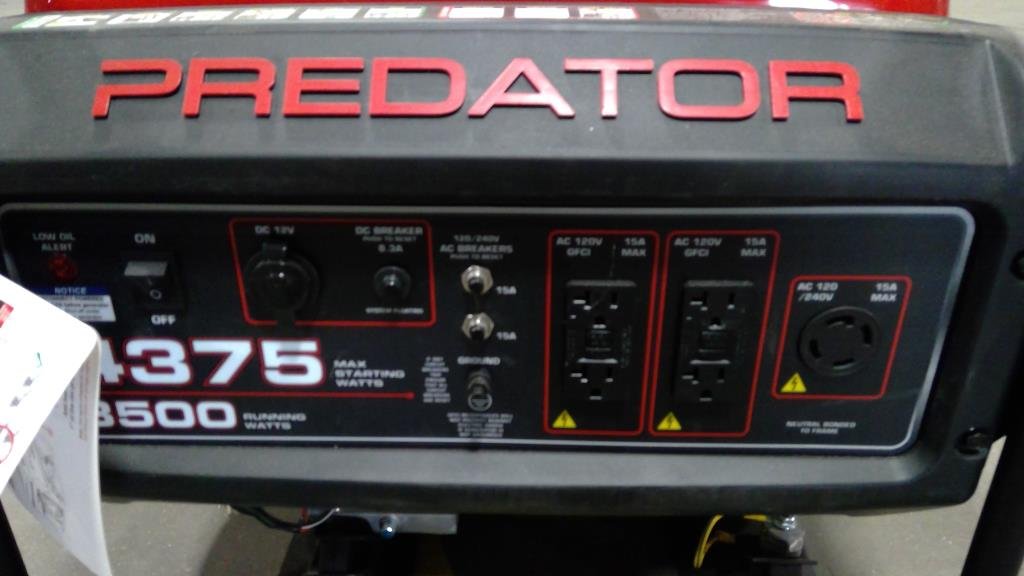
When the power goes out, or you need robust electricity far from the grid, a reliable generator isn't just a convenience—it's a necessity. For many, the Predator 4375 Generator Reviews & Comparisons often point to a clear winner in the value category. This workhorse from Harbor Freight has carved out a solid reputation, balancing substantial power output with an attractive price point. But is it the right generator for your specific needs? Let's cut through the noise and get down to what truly matters.
Predator 4375 at a Glance
- Power Output: 3500 running watts, 4375 peak watts.
- Engine: Robust 212cc OHV, 4-stroke.
- Fuel Efficiency: Approximately 10 hours runtime at 50% load on 4 gallons of fuel.
- Portability: 99 lbs, but includes never-flat wheels and fold-down handles.
- Noise Level: 72 dB – typical for a conventional generator, but louder than inverters.
- Starting: Manual recoil pull start.
- Outlets: Versatile, with two 120V 20A, one 120V 30A twist-lock, and a 12V DC.
- Safety: Low oil shutdown, circuit breaker protection.
- Best For: Emergency home backup, construction sites, RVs, events.
- Price: Typically $349-$399, offering significant value.
- Warranty: 2-year limited on material defects and workmanship.
Predator: A Brand Built on Value
Before we dive specifically into the 4375, it's worth understanding the Predator lineage. Manufactured by Harbor Freight Tools USA since 1988, Predator generators have become synonymous with quality and affordability. They fill a crucial niche, offering significant power output without the premium price tag of some national brands. This balance of power, portability (for their class), and price is their hallmark. Most Predator models boast impressive runtimes, often 10 hours or more at half load, making them excellent choices for sustained power needs.
While they may not always have the most advanced bells and whistles found in top-tier models, they reliably deliver on core functionality. They're often half the price of a comparable Honda, include essential safety features like low oil shutdown, and many models (including the 4375) are CARB compliant, which is a must-have for those in California. The primary trade-offs? Often a lack of advanced safety features beyond the basics, higher noise levels compared to quieter inverter models, and the sheer weight of some of the more powerful conventional units.
The Predator 4375: Powering Your Needs
Let's get specific about the Predator 4375. This isn't just any generator; it's a mid-range portable model engineered to strike an impressive balance. With 4375 peak/surge watts and 3500 running/continuous watts, it's more than capable of handling a variety of demanding tasks, from keeping your home operational during an outage to powering tools on a job site.
At its heart is a robust 212cc OHV single-cylinder four-stroke engine, a common and well-regarded power plant known for its durability and straightforward maintenance. It holds 4 gallons of fuel, translating to roughly 10 hours of runtime at 50% load—that's a full workday or a long night of backup power. At 72 dB, its noise level is typical for a conventional generator of this size, comparable to a vacuum cleaner or a busy street.
Starting is via a manual recoil pull start, a reliable mechanism that, while not as convenient as an electric start, is simple and less prone to electrical issues. Weighing in at 99 pounds, it's substantial, but the integrated never-flat wheels and fold-down handles significantly ease transport. Its compact dimensions (22.8″ L x 17.3″ W x 17.5″ H) also make it relatively easy to store.
Versatile Outlets for Diverse Needs:
The 4375 doesn't skimp on connectivity. You'll find:
- Two 120V 20A standard household outlets (5-20R) for your everyday appliances and tools.
- One 120V 30A twist-lock outlet (L5-30R), ideal for connecting to a transfer switch (with the right cord) or powering high-draw 120V equipment.
- One 12V DC outlet for charging automotive or recreational vehicle batteries.
Crucial safety features like low oil shutdown (which protects the engine from damage) and circuit breaker protection are standard.
Beyond the Specs: What Makes the 4375 Stand Out?
The numbers tell part of the story, but the distinguishing features truly highlight the Predator 4375's appeal:
- Unbeatable Value: In terms of watts per dollar, the 4375 is incredibly competitive. It significantly undercuts comparable generators from major national brands while delivering similar or superior power.
- Robust and Reliable Engine: The 212cc engine isn't just powerful; it's proven. It's designed for long-term use with proper care, and its widespread use means parts are readily available and affordable.
- Practical Mobility: While 99 pounds isn't feather-light, the integrated never-flat wheels and comfortable fold-down handles transform it from a heavy box into a manageable piece of equipment. You can easily roll it to where it's needed, even across uneven terrain.
- Parts Accessibility: This is a big one. Harbor Freight’s extensive network and commitment to their Predator line mean that if you ever need a replacement part—be it a spark plug, air filter, or even a carburetor—it’s usually easy to find and won't break the bank.
For more in-depth specifications and user feedback, you might want to visit our Predator 4375 generator hub.
Real-World Power: Where the 4375 Shines
With 3500 running watts at your disposal, the Predator 4375 is a surprisingly versatile power source. Let's look at some common scenarios:
Home Emergency Backup
During a power outage, the 4375 can keep your essentials running. You'll need to manage your loads, but it can handle:
- Refrigerator (700W running, 1500W starting)
- Freezer (500W running, 1000W starting)
- Sump pump (800W running, 1300W starting)
- Furnace fan (800W)
- Multiple lights (400-500W total)
- TV (200-300W)
- Microwave (1000W intermittent use)
- Small space heater (1000-1500W)
Strategy: The key is to cycle appliances. Don't run the microwave, space heater, and refrigerator all at once. Start the largest motor loads first (like a fridge or sump pump), let them stabilize, then add smaller loads.
Construction and Job Sites
This generator is a contractor's friend, providing ample power for common tools:
- Circular saw (1500W)
- Small air compressor (1200-1600W)
- Work lights (500W)
- Battery chargers (200W)
- Drills (600-900W)
- Smaller table saw (1800W)
The 30-amp twist-lock outlet is particularly useful here for distributing power or connecting to heavy-duty extension cords.
RV and Camping Adventures
For the adventurous spirit, the 4375 can significantly enhance your outdoor experience:
- RV air conditioner (13,500 BTU units typically require 1500-2000W running, easily handled)
- Electric cooking appliances (1000-1500W)
- Lighting (200-400W)
- Entertainment systems (200-300W)
- Small refrigerator (300-500W)
- Battery charging (100-200W)
It's a solid choice for running a standard RV air conditioner, which is often a primary concern for campers.
Special Events and Mobile Businesses
From outdoor parties to food trucks, the 4375 supports various needs:
- Lighting systems (400-800W)
- Sound equipment (300-500W)
- Food service equipment (e.g., small griddles, warmers, strategically)
- Point of sale systems (100-200W)
- Fans or portable heaters (1000-1500W)
Getting Your 4375 Started: Setup and Operation
Even the most seasoned generator owners appreciate a quick refresher. For newcomers, understanding the basics of setup and safe operation is paramount.
Initial Setup Essentials
Before you even think about starting it up, a few key steps are necessary:
- Assemble Components: Attach the wheel kit and fold-down handles. This is usually straightforward with basic tools.
- Add Engine Oil: This is critical! The generator ships without oil. You'll need approximately 0.6 quarts (20 ounces) of SAE 10W-30 oil. If operating in very cold conditions, 5W-30 is recommended. Do not overfill.
- Fuel Up: Fill the tank with fresh unleaded gasoline (87+ octane) with a maximum of 10% ethanol. Older or high-ethanol fuel can cause issues.
- Air Filter Check: Ensure the air filter is properly installed.
- Grounding: For safety, follow the manual's instructions for grounding the generator. This typically involves connecting a ground wire to an earth ground rod.
Starting Procedure: A Step-by-Step Guide
Once prepped, getting your Predator 4375 running is simple:
- Placement: Always operate outdoors on a level surface, in a well-ventilated area, at least 20 feet away from any doors, windows, or vents to prevent carbon monoxide buildup.
- Check Levels: Double-check your oil and fuel levels.
- Fuel Valve: Turn the fuel valve to the "ON" position.
- Choke: If the engine is cold, move the choke lever to the "CLOSED" position. For a warm engine, keep it "OPEN."
- Engine Switch: Turn the engine switch to "ON."
- Pull Start: Grip the starter handle lightly until you feel resistance, then pull rapidly with a smooth, strong motion. Avoid yanking.
- Choke Adjustment: As the engine warms up (usually within 30-60 seconds), gradually move the choke lever to the "OPEN" position.
- Warm-Up: Allow the engine to run for a few minutes before connecting any electrical loads.
Safe Operation Practices You Can't Ignore
Your safety, and the longevity of your generator, depend on following these rules:
- Carbon Monoxide Danger: This is non-negotiable. NEVER operate a generator indoors or in partially enclosed spaces. Carbon monoxide is an odorless, colorless, deadly gas. Always keep it at least 20 feet from your home, directing exhaust away from any occupied buildings. Use battery-operated CO detectors in your home.
- Electrical Safety: Avoid operating the generator in wet conditions without adequate shelter. Always use outdoor-rated, heavy-duty extension cords that are properly rated for the load.
- Fire Prevention: Let the generator cool down completely before refueling. Gasoline is highly flammable. Clean up any fuel spills immediately and keep flammable materials away from the generator.
- Load Management: Never exceed the generator's 3500W running capacity (or 4375W surge). Overloading can damage the generator and connected appliances. Connect larger loads first, then smaller ones.
- Proper Shutdown: Before turning off the generator, disconnect all electrical loads. This prevents potential damage to your appliances or the generator.
Keeping Your 4375 Running Strong: Maintenance & Storage
Regular maintenance is the secret to a long-lasting generator. The Predator 4375 is designed for straightforward care, making these tasks accessible for most owners.
Regular Maintenance Schedule
Think of this as your generator's health check-up plan:
- Before Each Use: Check engine oil, air filter, fuel leaks, controls, and cooling fins.
- After First 20 Hours: This initial break-in period requires an oil change. Also, check/adjust valve clearance and inspect the spark plug.
- Every 50 Hours / 3 Months: Change the engine oil, clean the air filter, check/clean the spark plug, and clean the fuel sediment cup.
- Every 100 Hours / 6 Months: In addition to the 50-hour tasks, change the oil, clean/replace the air filter, replace the spark plug (if needed), clean the fuel tank/filter, clean the spark arrestor, and check fuel hoses.
- Every 300 Hours / Annually: This is a comprehensive service. Replace the spark plug and air filter, check/adjust valve clearance, clean the combustion chamber (professional service often recommended here), check fuel lines, and inspect/clean the carburetor.
Key Maintenance Procedures
These are tasks you'll perform most often:
- Oil Change: Warm up the engine for a few minutes. Place a drain pan underneath, then remove the drain plug and the oil fill cap/dipstick. Allow all 0.6 quarts (20 oz) of used oil to drain. Replace the drain plug and fill with fresh SAE 10W-30 oil.
- Air Filter Service: Remove the air filter cover and element(s). If it's a foam element, wash it in warm soapy water, rinse, dry thoroughly, and lightly coat with fresh engine oil. If it's a paper element, tap it clean or replace it.
- Spark Plug Maintenance: Carefully remove the old spark plug. Inspect it for wear or fouling. Clean it with a wire brush or replace it with an F7TC (or equivalent) plug. Ensure the gap is set correctly (0.7-0.8mm or 0.028-0.031″).
- Carburetor Cleaning: If you suspect fuel-related issues, you might need to clean the carburetor. Turn off the fuel valve, drain the fuel bowl, and carefully remove and clean the main jet and pilot jet with carburetor cleaner. This is a more advanced task, so consult your manual or a professional if unsure.
Storage Preparation (for Periods Longer Than 30 Days)
Proper storage prevents issues when you next need your generator:
- Fuel Stabilizer: Add a fuel stabilizer to the tank and run the generator for about 10 minutes to circulate it through the fuel system.
- Run Dry: Turn off the fuel valve and let the engine run until it completely stops from lack of fuel. This prevents stale fuel from gumming up the carburetor.
- Oil Change: Perform an oil change while the engine is still warm.
- Cylinder Protection: Remove the spark plug, pour about one tablespoon of clean engine oil into the cylinder, and slowly pull the starter cord a few times to distribute the oil. Reinstall the spark plug. This lubricates the cylinder walls and prevents rust.
- Clean & Cover: Clean the exterior of the generator and cover it with a breathable cover.
- Location: Store it in a dry, clean location, away from direct sunlight or extreme temperature fluctuations.
When Things Go Sideways: Troubleshooting Common Issues
Even the most reliable generators can have an off day. Here's a quick guide to common problems and their solutions for your Predator 4375:
- Starting Issues:
- No Start: Check fuel level/quality, ensure oil isn't too low (activates low oil shutdown), spark plug condition, choke position (closed for cold, open for warm), clear any clogged fuel lines/filters, inspect carburetor.
- Hard Starting: Often due to a weak spark, partial fuel restriction, incorrect valve clearance, or a damaged recoil starter mechanism.
- No Electricity Output:
- Breakers: Reset the circuit breaker(s) on the control panel.
- Outlets: Test each outlet.
- Wiring/AVR: Inspect wiring connections. If still no power, it could indicate an issue with the Automatic Voltage Regulator (AVR).
- Low Voltage:
- RPM: Ensure the engine is running at the correct 3600 RPM under load.
- Overload: Reduce the electrical load to prevent overloading.
- Internal Issues: Could be failing brushes or a faulty capacitor (if applicable to this model).
- Engine Surges/Hunts (RPM Fluctuations):
- Fuel: Use fresh, quality fuel.
- Fuel System: Clean the fuel system (carburetor, fuel filter).
- Air Leaks/Governor: Inspect for air leaks around the carburetor or issues with the governor adjustment.
- Engine Runs, Then Dies:
- Fuel Cap: Check if the fuel cap vent is clogged.
- Overheating: Ensure the generator isn't overheating (clean cooling fins).
- Ignition/Oil: Ignition problems or low oil shutdown activation.
- Excessive Vibration:
- Loose Parts: Tighten any loose mounting hardware.
- Engine Mounts: Inspect engine mounts for wear or damage.
- Internal: Could indicate internal engine problems.
- Cooling: Clear any debris from cooling fins.
- Unusual Noise:
- Loose Parts: Check for any loose covers or components rattling.
- Bearings: Grinding or squealing noises might suggest bearing wear.
- Valvetrain: Clicking or tapping could indicate valvetrain issues (e.g., valve clearance).
- Exhaust: Check for exhaust leaks.
The Verdict: User Experience & What Others Say
Predator 4375 generator reviews frequently highlight a consistent pattern of user satisfaction, particularly concerning its balance of performance and price.
What Users Praise:
- Exceptional Value Proposition: This is almost universally mentioned. For its price, the 4375 delivers power and reliability that often exceeds expectations.
- Reliability with Maintenance: Many users report years of dependable service, attributing it to the generator's robust design and diligent basic maintenance.
- Strong Power Output: It confidently handles demanding motor-driven appliances and power tools, often exceeding the real-world performance of similarly rated units.
- Solid Runtime: The 10 hours at 50% load is a practical duration, often meaning a full day of use or an overnight backup without immediate refueling.
- Ease of Maintenance: Its relatively simple design means routine tasks like oil changes and spark plug replacements are accessible for owners with moderate mechanical skills.
- Readily Available Parts: The ease of finding affordable replacement parts at Harbor Freight stores or online is a significant plus.
Common Criticisms:
- Noise Level: At 72 dB, it’s a conventional generator, and that means it's louder than the whisper-quiet inverter models. This is a common trade-off for its power and price.
- Weight: 99 pounds is substantial. While the wheels help, it's still a heavy piece of equipment to lift or maneuver over very challenging terrain.
- Manual Start Only: The lack of an electric start is a drawback for some, especially those with physical limitations or those who prefer push-button convenience.
- Power Quality: As a conventional generator, it doesn't produce the "clean" sine wave power ideal for sensitive electronics (like unconditioned laptops, some smart TVs, or delicate medical equipment). For those, an inverter generator is usually recommended.
- Messy Oil Changes: Some users note that the oil drain plug's location can make oil changes a bit messy without a creative funnel or pan setup.
Predator 4375 vs. The Competition
Understanding where the Predator 4375 fits in the generator landscape requires comparing it to other options.
Conventional Generator Comparisons:
- Vs. Smaller Generators (3000W range): The 4375 offers significantly more power, particularly for motor starting and heavy-duty applications. It's often similar in physical size, though marginally heavier, and consumes slightly more fuel. The added $50-100 cost for the extra wattage is often considered a worthwhile investment.
- Vs. Larger Generators (5000W+ range): The 4375 is more portable, consumes less fuel, and is sufficient for most residential emergency needs, making it a more practical choice than larger, often overkill, units. It's also significantly more affordable, typically $150-300 less. However, it cannot power as many devices simultaneously or provide near whole-house backup for larger homes.
Vs. Inverter Generators:
This is where the differences are most pronounced:
- Cost: The 4375 is substantially more affordable (often 50-60% less) than an inverter generator with comparable running wattage.
- Technology: Conventional generators like the 4375 are mechanically simpler and more robust, making them often less expensive to repair. Inverter generators, like the Predator 63584 (3500 peak/3000 running watts, 57 dB(A)) or a 2000-watt Predator (2000 peak/1600 running watts, 65 dB(A)), produce "cleaner" AC-DC-AC sine wave power, which is safer for sensitive electronics.
- Noise & Efficiency: The 4375 is notably louder (10-15 dB higher) and less fuel-efficient than inverter models, which adjust engine speed to load, saving fuel and reducing noise.
- Weight: For comparable wattage, conventional generators are usually heavier.
Important Note on Power Needs: When comparing, always calculate your specific power needs. A hair dryer (1,500W), Central AC (3,800W), Water heater (4,500W), or Refrigerator (700W running / 1500W starting) all have different demands. RVs with multiple large appliances often need 7,000 to 9,000 running watts, putting them beyond the 4375's capacity.
Is the Predator 4375 Right for You?
Understanding your own needs is the most crucial part of any generator purchase. The Predator 4375 is an excellent fit for specific user profiles:
Ideal User for the Predator 4375:
- Homeowners needing affordable emergency backup for essential appliances like a refrigerator, freezer, sump pump, and some lights.
- Contractors and DIY enthusiasts who require reliable power for common power tools on job sites.
- RV owners who want to power a standard 13,500 BTU air conditioner and other comforts while camping.
- Budget-conscious buyers who prioritize value and performance over premium features like electric start or ultra-quiet operation.
- Users with moderate mechanical skills who are comfortable with basic manual starting and routine maintenance.
- Anyone interested in learning more about their power options can also consult our in-depth guide to Predator generators.
Less Suitable for the Predator 4375:
- Users of sensitive electronics (e.g., high-end computers, medical devices) where "clean" power is non-negotiable (an inverter generator is recommended).
- Those prioritizing ultra-quiet operation above all else, perhaps for residential areas with strict noise ordinances or very quiet campsites.
- Applications requiring more than 3500W continuous power (e.g., larger whole-house backup, running multiple high-draw appliances simultaneously).
- Individuals with physical limitations who might struggle with a manual recoil pull start.
- Whole-house backup needs that require direct connection to an electrical panel and significant total wattage (these typically call for larger standby generators).
Power Up Smart: Your Next Steps
The Predator 4375 generator truly represents a sweet spot for many—offering robust power, dependable performance, and impressive value. It’s a solid choice that can alleviate stress during outages or provide crucial power on demand.
To make the most informed decision, consider these final actionable tips:
- Assess Your Power Needs: Create a list of all appliances and tools you plan to run. Note both running and starting wattages. This will confirm if 3500 running watts is sufficient.
- Understand Your Environment: Where will you use it? How close are neighbors? Is noise a significant concern? This helps evaluate the 72 dB level.
- Commit to Maintenance: Recognize that any generator requires regular maintenance. Be prepared to perform basic tasks like oil changes and air filter cleaning to ensure its longevity.
- Invest in Safety Gear: Always have functioning carbon monoxide detectors when operating a generator, and use appropriate heavy-duty, outdoor-rated extension cords.
- Read the Manual: Before first use, thoroughly read the owner's manual. It contains crucial safety information, detailed setup instructions, and maintenance schedules specific to your unit.
By carefully weighing the Predator 4375’s capabilities against your specific requirements, you can confidently decide if this powerful and affordable generator is the right solution for your power needs. For a deeper dive into the specifics or to find related accessories, don't forget to check out our dedicated Predator 4375 resource center.